
(The Center Square) – At a speed astronauts haven’t experienced since Apollo, Artemis II re-entered Earth’s atmosphere and splashed down near San Diego Friday evening, concluding a historic mission that took humans farther than ever.
There were cheers everywhere, from the amphibious dock ship USS John P. Murtha, ready to pick up the astronauts and their capsule, to Mission Control in Houston.
The Orion spacecraft, nicknamed Integrity by its crew, landed, as scheduled, at 5:07 p.m. Pacific time on the Pacific Ocean in a splashdown that a NASA commentator called “perfect” under clear skies. Everything seemed to go according to plan as three parachutes slowed down Integrity and brought it gently home. Five airbags on Integrity kept the spacecraft upright as recovery teams approached the capsule.
Before that was some drama. Commander Reid Wiseman, pilot Victor Glover, Christina Koch and Canadian astronaut Jeremy Hansen hit the atmosphere at 32 times the speed of sound. That’s roughly 25,000 mph.
Animation by NASA showed the capsule as a quickly descending ball of fire – one protected by a heat shield. In the final minutes, the module appeared in a blue sky, falling toward the water. Wiseman reported the entire crew was in good condition.
Around 6:30 p.m. Pacific time Friday, Navy divers brought the astronauts out of the capsule onto a raft, nicknamed the “front porch.” Within a half-hour, the Navy hoisted the astronauts into HSC-23 helicopters and transported them to the top deck of the USS John P. Murtha – 3,000 yards from Integrity, where they would receive medical exams.
The capsule’s descent started with Integrity separating flawlessly around 4:33 p.m. Pacific time from the European Space Agency’s Service Module. Small boats were on route to the splashdown’s target zone.
The astronauts and Integrity were being retrieved by the USS John P. Murtha, named after the late Pennsylvania congressman. The amphibious dock ship traveled 50 or so miles from Navy Base San Diego to retrieve the astronauts and Integrity. As the astronauts splashed down in the Pacific Ocean, Navy crew in MH-60S Sea Hawk helicopters took photos and videos for NASA.
Unlike Apollo capsules that were lifted onto ships by cranes, the Artemis capsule was to be towed through the ocean into the amphibious ship’s well deck. Navy divers from Explosive Ordnance Disposal Group 1 handled the recovery.

The Artemis II crew shares a group hug inside the Orion spacecraft on their return, April 7, 2026. Photo: NASA / Public Domain
It was a mission that broke several records, including Koch becoming the first woman to orbit the moon and Glover, the first Black man to do so. Likewise, Hansen became the first Canadian to go around the moon.
As the crew traveled to the moon’s dark side, the astronauts journeyed 252,756 miles from Earth, breaking Apollo 13’s record in 1970. Hansen, who’s with the Canadian Space Agency, told Mission Control that he and his fellow astronauts “choose this moment to challenge this generation and the next to make sure this record is not long lived.”
NASA is working on making more history in the future.
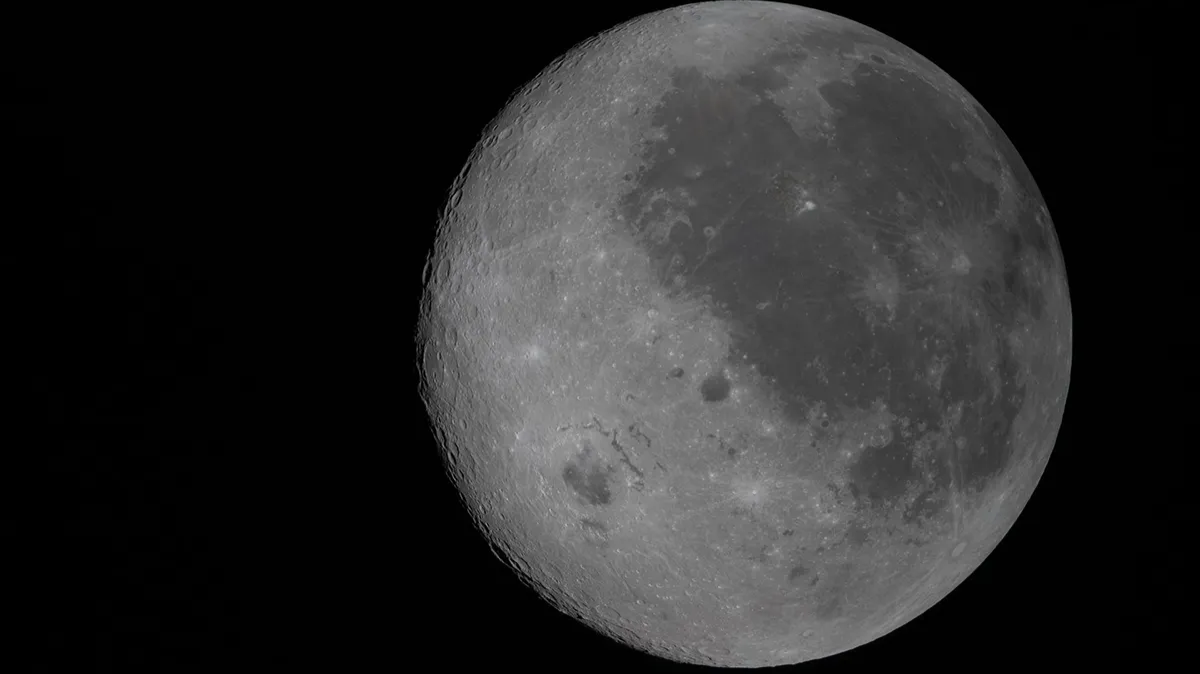
Earlier this week, NASA spokesperson Cheryl Warner told The Center Square that the space agency and its commercial partners are following a timeline to establish a moon base, with NASA keeping its eye on Mars.
The first phase consists of Artemis missions to prove transportation and lander capabilities. Warner said support infrastructure including mobility and power systems would be introduced during the second phase in the late 2020s, followed by the addition of larger habitation elements in the early-to-mid 2030s.
“These phased efforts will create the foundation for future Mars missions by maturing critical systems, operational practices, and technologies needed for long‑duration human exploration,” Warner said, answering The Center Square’s questions by email.
For now, NASA is working toward Artemis III, next year’s low Earth orbit flight to test the Orion spacecraft and its rendezvous and docking with one or both moon landers built by SpaceX and Blue Origin. After that, the schedule calls for Artemis IV in 2028 when humans will step on the moon for the first time in more than 50 years.